
Click here to find our honey products at local retailers. Dismiss
Skip to content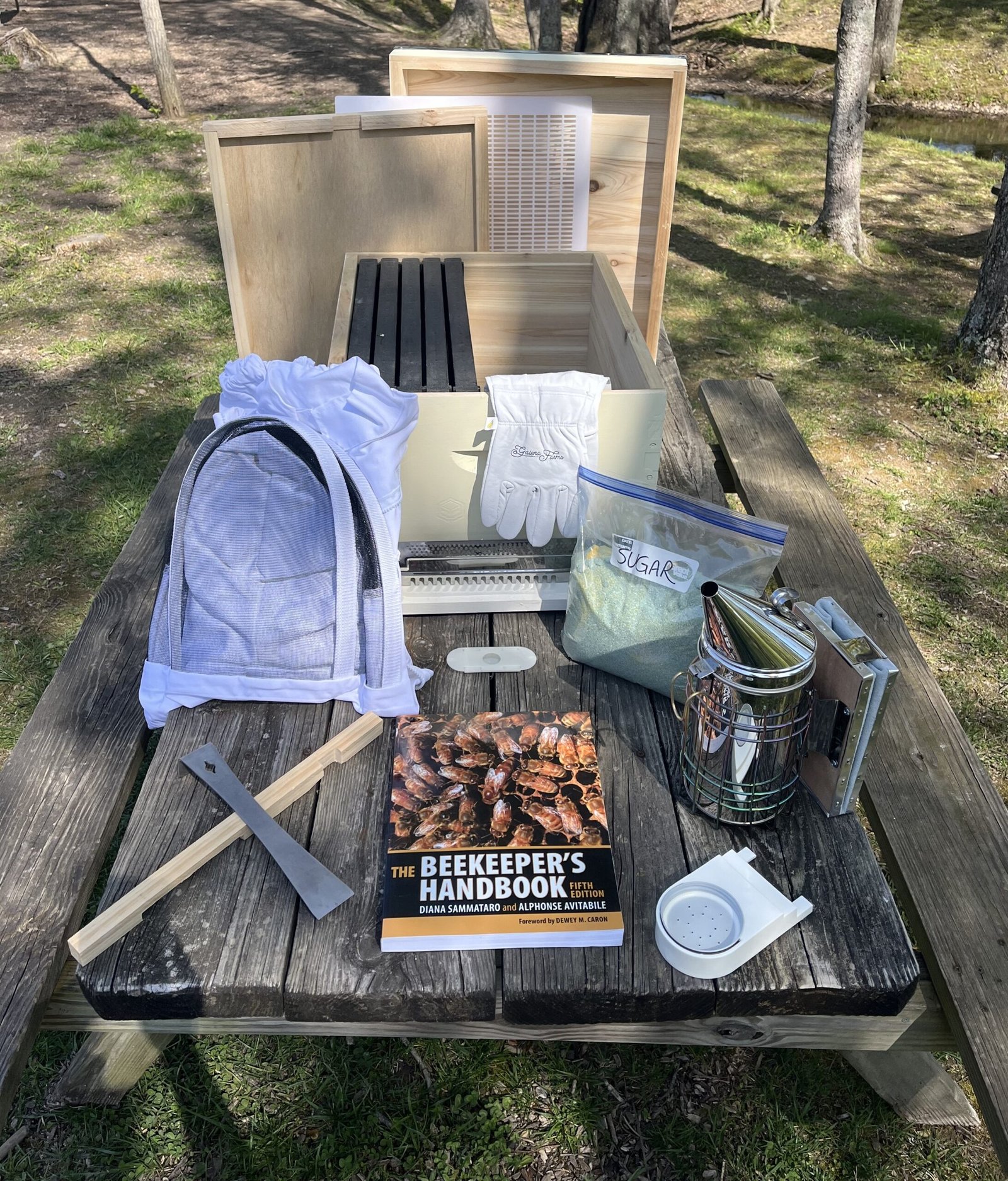
Starting beekeeping requires the right equipment to ensure safety, efficiency, and long-term colony health. This guide covers essential beekeeping tools every beginner needs, including protective clothing, hive components, smokers, feeding supplies, and honey harvesting equipment. It also explains the importance of hive stability, proper nutrition, and record keeping. With the right preparation and dependable tools, new beekeepers can confidently manage healthy colonies and enjoy a successful, rewarding beekeeping journey.
Wearing safety clothing should be your first priority before opening your first hive. Thousands of insects that are inherently protective of their colony must be closely interacted with during beekeeping. While keeping you comfortable during inspections, a high-quality bee suit or jacket composed of light-colored, breathable fabric helps lower the risk of stings. Your face and neck, which are sensitive areas, are protected by a veil that fits properly. To examine bee behavior clearly and brood patterns, you must have good sight through the veil. Gloves protect hands when removing propolis-sealed hive components or lifting frames. Beginners benefit from heavier protection as they gain confidence, while some seasoned beekeepers eventually prefer lighter gloves for dexterity. Purchasing dependable protection gear not only lowers your chance of getting stung, but it also enables you to operate quietly and concentrate on mastering effective hive management methods
The hive itself forms the foundation of your beekeeping operation. Most beginners choose the Langstroth hive because it is widely used, modular, and easy to expand as the colony grows. A standard setup includes brood boxes, which house the queen and developing bees, along with honey supers placed above for surplus honey storage. Inside each box are removable frames that hold foundation sheets made of wax or plastic. Foundation guides bees to build straight comb, making inspections and honey harvesting much easier. Well-constructed woodenware reduces warping and extends the life of your equipment. Choosing durable hive components from the start saves time and money over the long term. Properly assembled hive boxes also allow for adequate bee space, which helps prevent excess comb buildup and makes regular inspections smoother and more efficient.
A strong base is essential for hive health and longevity. The bottom board acts as the floor of the hive and supports all stacked components. Many beekeepers select screened bottom boards because they improve ventilation and can assist in monitoring mite levels. Adequate airflow reduces moisture buildup, which is critical in preventing mold and maintaining healthy brood conditions. Placing the hive on a sturdy stand elevates it off the ground, protecting it from damp soil, pests, and uneven terrain. Elevation also makes hive inspections more comfortable by reducing the need to bend excessively. A stable, level platform ensures boxes remain aligned and secure. These foundational components may seem simple, but they play a significant role in colony health, pest prevention, and long-term structural durability.
Two of the most frequently used tools in beekeeping are the smoker and the hive tool. A smoker produces cool smoke that disrupts alarm pheromones released by guard bees. This encourages bees to focus on feeding rather than defending, creating a calmer environment during inspections. A durable stainless steel smoker with reliable bellows ensures consistent airflow and long-lasting performance. Natural fuels such as pine needles or untreated wood shavings work well for producing clean smoke. Equally important is the hive tool, which helps separate boxes and frames that bees seal together with propolis. It also scrapes excess wax and debris from equipment. Without a hive tool, routine inspections would be difficult and time-consuming. These simple yet essential tools make hive management safer and more efficient for beginners.
Although pollen and natural nectar are the main sources of nutrition for bees, some seasons may call for additional feeding. When nectar sources are limited, frame feeders, which fit within the hive, let you provide the colony with sugar syrup straight. Another approach is to use entrance feeders, but they need to be closely watched to avoid drawing in other bees. Some beekeepers stimulate brood development in the early spring by using pollen patties in addition to syrup feeders. When removing bees from frames for inspections or honey harvesting, a soft bee brush comes in very handy. These extra resources guarantee that your colony continues to receive enough nourishment even during trying times. Giving prompt assistance promotes consistent colony growth and helps avoid starvation, particularly for young hives that are still establishing themselves.
When your colony produces surplus honey, proper harvesting tools are necessary to maintain cleanliness and efficiency. An uncapping knife or fork removes the thin wax layer sealing honey cells before extraction. Once uncapped, frames are placed in a honey extractor that spins them to remove honey without damaging the comb. Manual extractors are suitable for small-scale beekeeping, while electric models save time for those managing multiple hives. Food-grade buckets and strainers help filter debris before bottling. Maintaining sanitary conditions throughout the extraction process preserves honey quality and prevents contamination. Having dedicated harvesting equipment ensures that honey collection is smooth and does not disrupt the structural integrity of reusable frames.
Successful beekeeping extends beyond physical tools. Record keeping is a valuable practice that improves long-term outcomes. Maintaining a notebook or digital log allows you to document inspection dates, brood patterns, queen performance, feeding schedules, and pest observations. Over time, these records reveal seasonal trends and help you make informed management decisions. Investing in durable equipment and maintaining it properly also contributes to sustainability. Clean and store tools in a dry area to extend their lifespan. Thoughtful preparation, consistent monitoring, and quality equipment create a strong foundation for beginner beekeepers. With the right tools and organized management, you can build healthy colonies and enjoy a productive and rewarding beekeeping experience for years to come. For high quality beekeeping supplies, practical advice, and dependable guidance, connect with Hunters Honey Farm today.
Essential beekeeping equipment includes a hive with boxes and frames, foundation, a bottom board, and a hive stand. You also need protective gear such as a bee suit, veil, and gloves. Basic tools include a smoker, hive tool, bee brush, and feeders for supplemental nutrition when necessary.
Beginner beekeeping equipment typically costs between 500 and 1,500 dollars, depending on quality and hive type. Costs include hive components, protective clothing, tools, and bees. Additional expenses may arise for pest management supplies, feeding equipment, and honey extraction tools as your apiary grows.
Income from beekeeping varies widely. Hobbyists often sell small batches of honey to offset expenses, while larger operations can earn revenue from honey, beeswax, and pollination services. Profit depends on hive numbers, local demand, seasonal conditions, and management practices.
Most beginners select the Langstroth hive because it is widely used and easy to expand. Consider your climate, available space, and management style. Choose durable materials and standard-sized components to ensure easy maintenance and access to replacement parts.
Beginner beekeepers should wear a bee suit or jacket, a properly fitted veil, and gloves for hand protection. Light colored, breathable fabric reduces bee agitation and keeps you comfortable. Protective gear builds confidence and lowers the risk of stings during inspections.
Common feeders include frame feeders, entrance feeders, and top feeders. Frame feeders sit inside the hive, while entrance feeders attach externally. Feed bees sugar syrup during nectar shortages, early spring buildup, or when establishing a new colony.
A healthy colony shows consistent brood patterns, active foraging, adequate honey and pollen stores, and calm behavior during inspections. You should see eggs, larvae, and capped brood in a solid pattern, along with a strong population of worker bees.
Regular inspections and early monitoring are key to prevention. Use integrated pest management strategies, maintain good ventilation, and avoid overcrowding. Test for Varroa mites routinely and apply approved treatments only when necessary to protect colony health.