
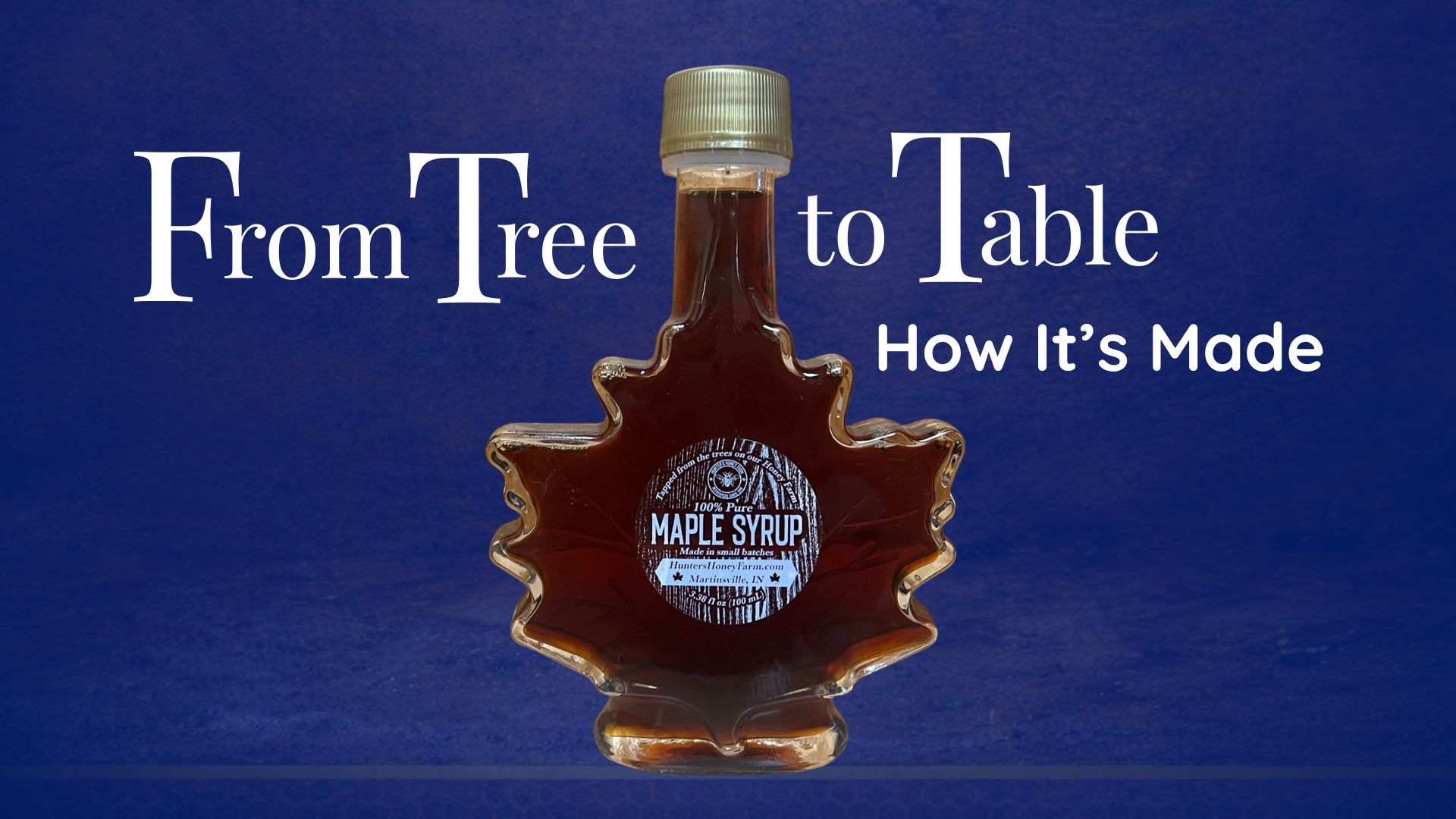
Every late winter in Indiana, when the nights are still freezing but the days start to warm, something remarkable begins happening inside maple trees. The trees begin moving stored sugars through their trunks, producing the clear sap that eventually becomes pure maple syrup.
At Hunter’s Honey Farm in Martinsville, Indiana, this seasonal tradition turns raw maple sap into rich, golden syrup using time-honored methods combined with modern equipment.
If you’ve ever wondered how maple syrup is made, here’s a behind-the-scenes look at the entire process, from tapping maple trees to boiling sap into pure maple syrup.

Maple syrup production depends entirely on weather conditions. Sap begins flowing when temperatures fluctuate between freezing nights and warmer daytime temperatures (around 40°F).
According to the University of Vermont Proctor Maple Research Center, these freeze-thaw cycles create pressure changes inside the tree that cause sap to move upward through the trunk.

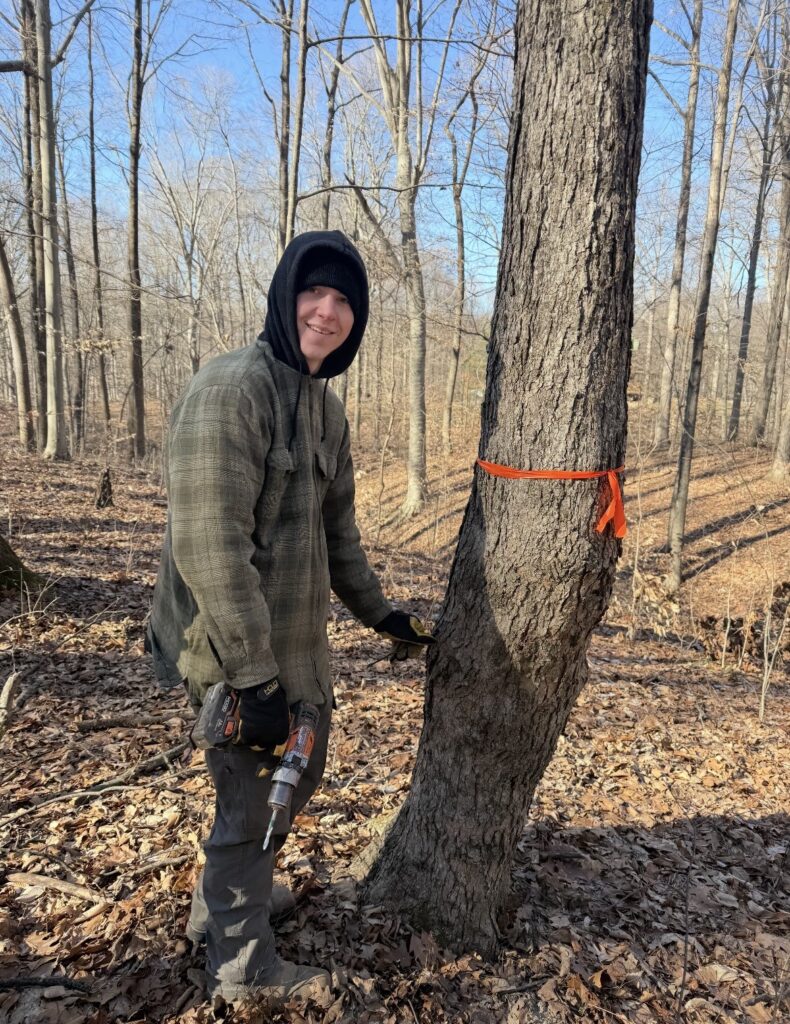
The first step in producing maple syrup is tapping the maple trees.
Small holes are carefully drilled into healthy maple trees to allow sap to flow. This process does not harm the tree when done properly, and the same trees can be tapped year after year.
At Hunter’s Honey Farm, our team begins by drilling small holes into the trees to start the process. Each tap produces sap that flows slowly from the tree during the maple season.


After the hole is drilled, a tap (also called a spout) is inserted into the tree.
The tap allows sap to exit the tree and flow into a collection system. Many maple trees can produce 10 to 20 gallons of sap per season, depending on tree size and weather conditions.
Once the taps are installed, tubing directs the sap into 2.5-gallon collection jugs.
Hunter is shown attaching these jugs to capture the sap flowing from the trees. At this stage, the liquid is very clear and watery because maple sap contains only about 1–2% natural sugar.

Two to three times per week during maple season, our team walks the woods to collect sap from the trees.
The sap from each jug is poured into buckets and transported back for processing. Because sap is mostly water, it takes a significant amount to produce syrup.
According to the USDA, it takes approximately 40 gallons of maple sap to produce one gallon of maple syrup.
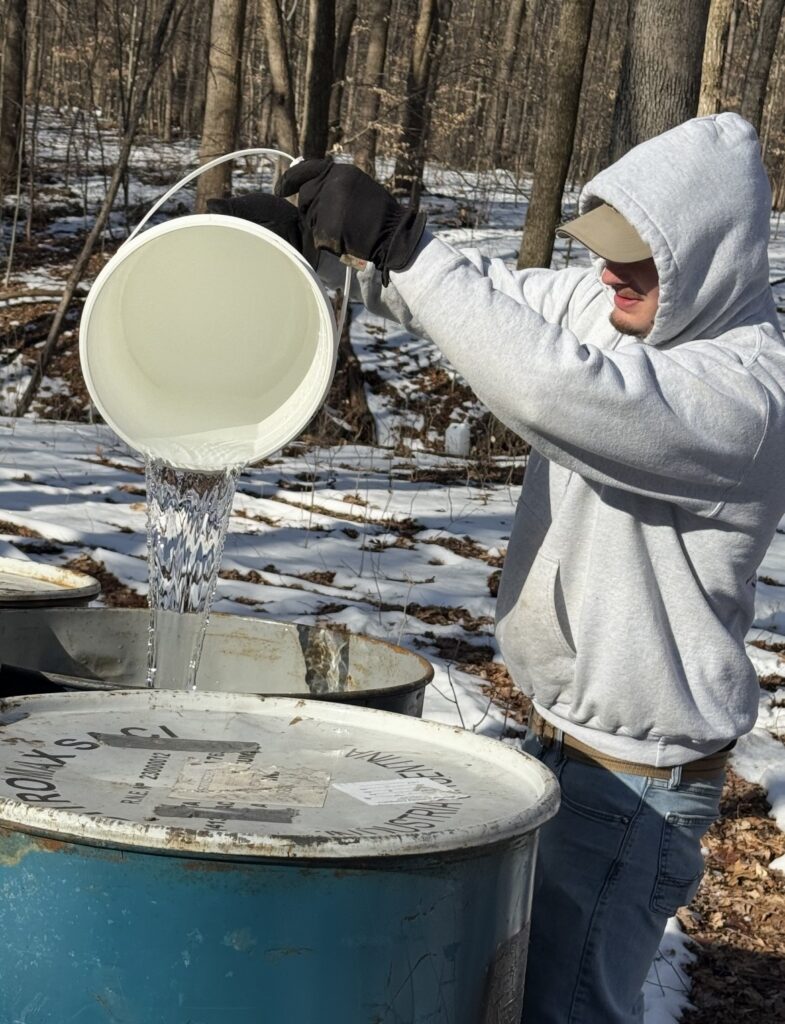
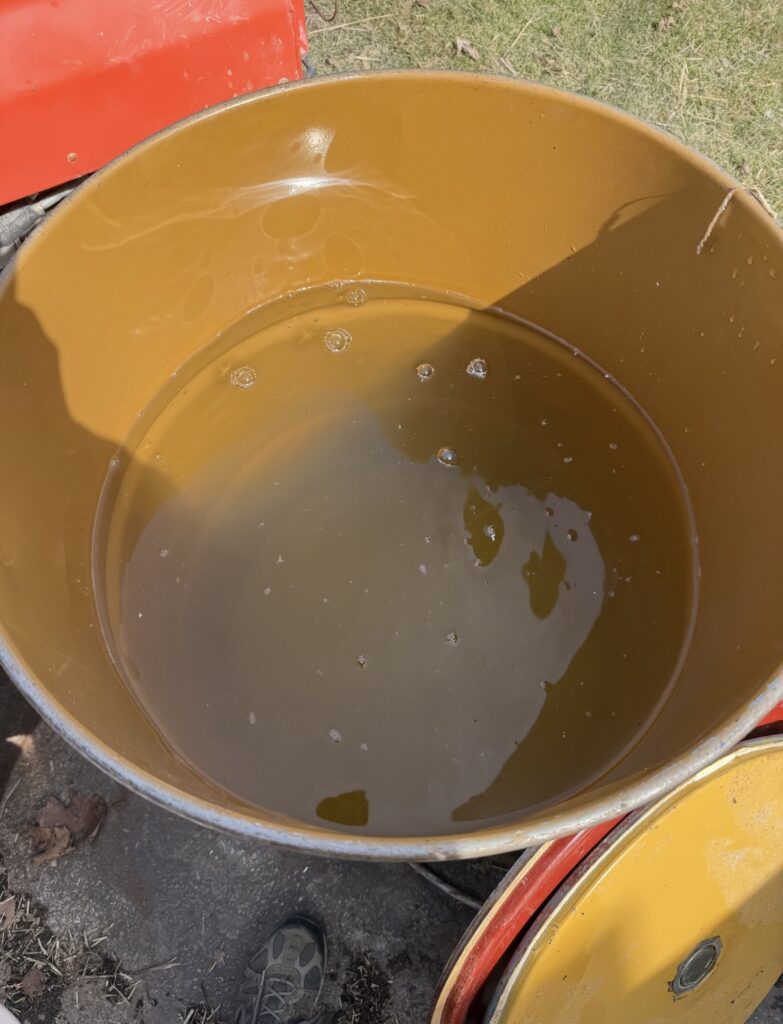
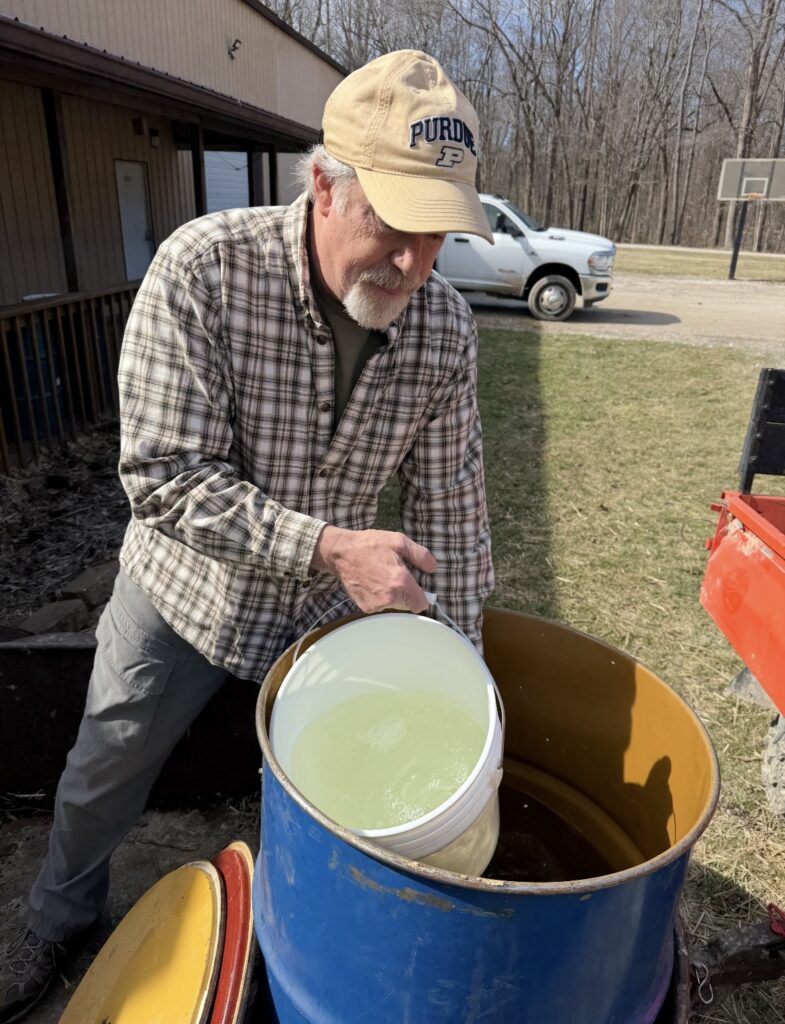
After the sap is gathered from the woods, it is poured into large storage barrels before boiling.
Jay is shown transferring the sap into these barrels. From above, you can see the collected sap waiting for the next step.

This is where the real transformation happens.
Sap is poured into a large maple syrup evaporator, which boils the liquid for hours. As the sap boils, water evaporates, concentrating the natural sugars.
Eventually, the sugar content reaches 68%, which is the legal standard for maple syrup according to the US Food and Drug Administration and USDA grading standards.
Pure maple syrup is one of the most natural sweeteners available.
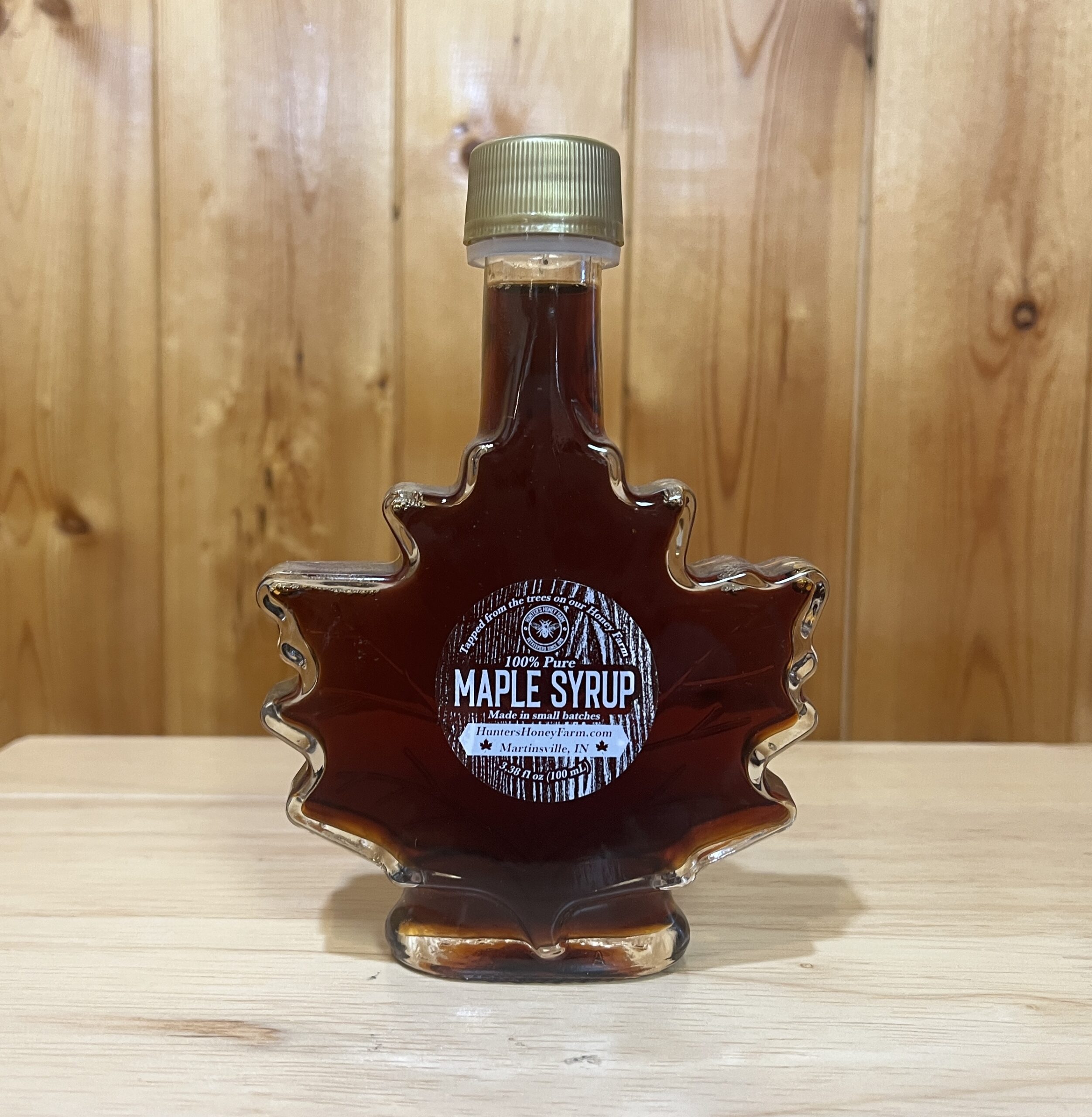
Unlike artificial syrups, real maple syrup contains only one ingredient: maple sap.
It also contains beneficial nutrients including:
• Manganese
• Zinc
• Antioxidants
• Natural plant compounds
According to research published by the University of Rhode Island, maple syrup contains over 20 beneficial antioxidant compounds.

Producing maple syrup is a seasonal labor that requires patience, teamwork, and the right weather conditions.
From tapping maple trees deep in the woods to slowly boiling sap into syrup, each bottle represents weeks of careful work.
At Hunter’s Honey Farm, we’re proud to share this time-honored Midwest tradition with our customers.