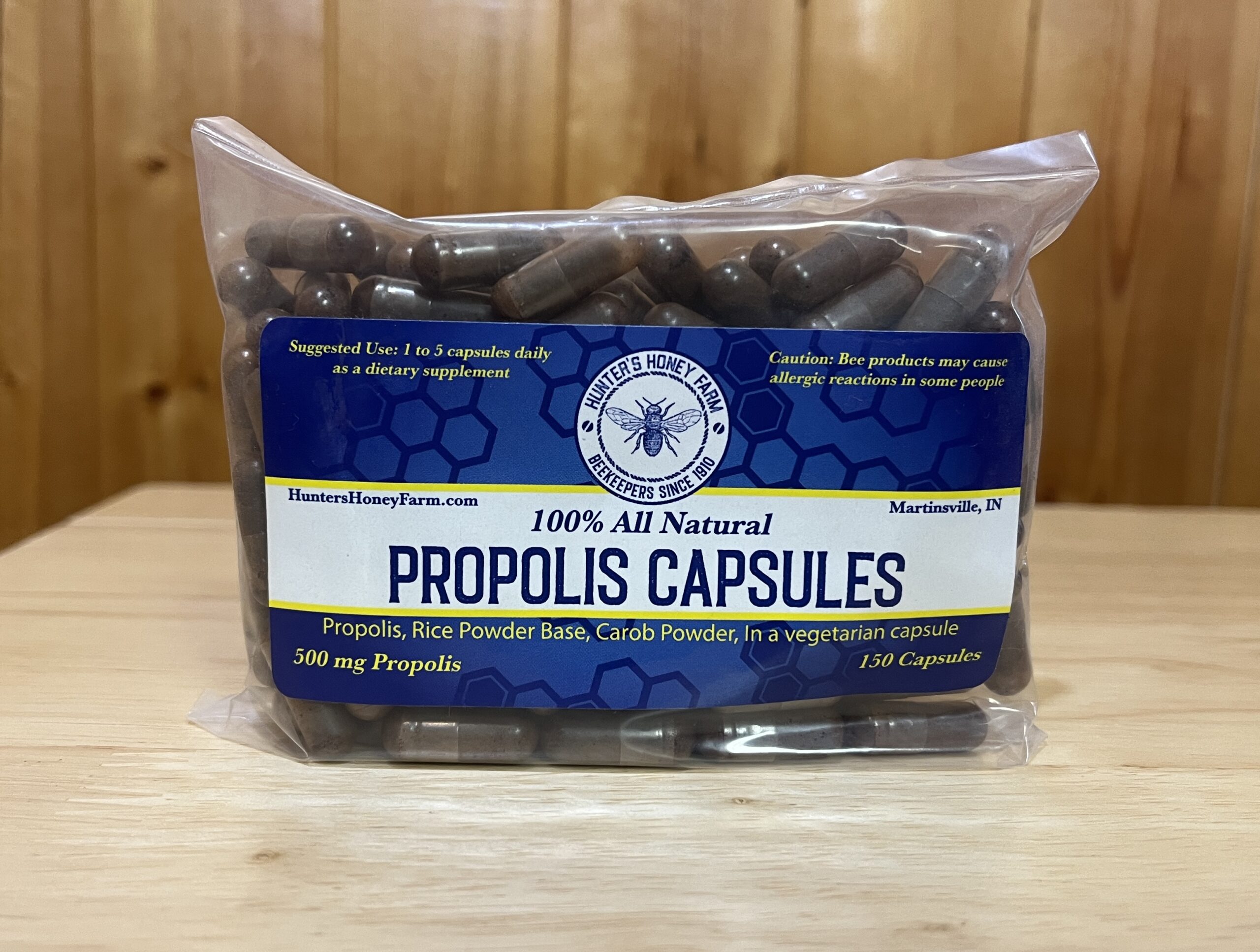
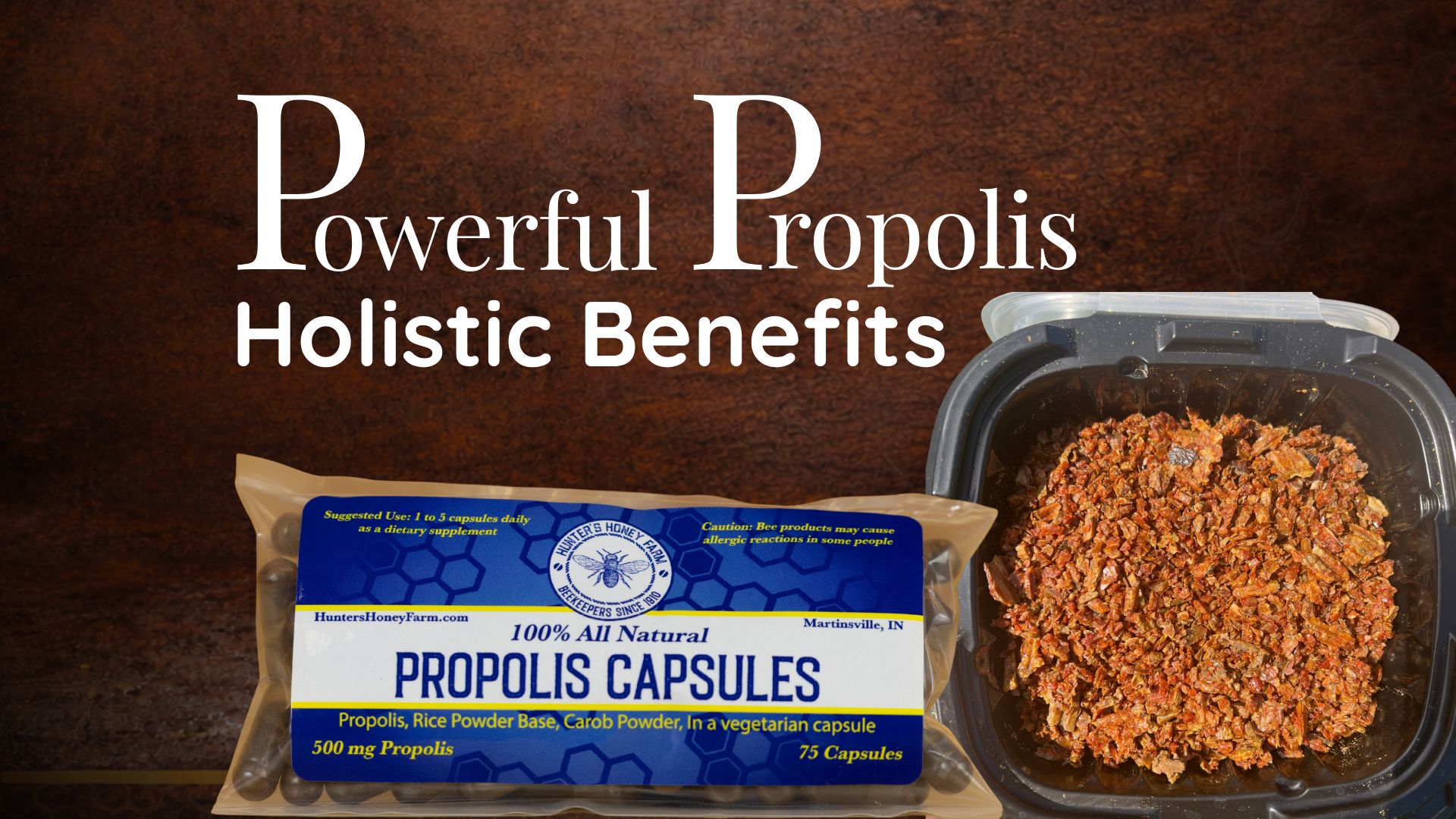
Propolis is made by honey bees as they collect the resins of various trees and flower buds. The bees use this wax like compound to repair damage to the hive and sanitize their home.
Propolis is a sticky, waxy substance made by honey bees as they collect the resins of various trees, bushes, and flower buds. The bees use this compound to repair damage to the hive. Propolis is also used to entomb insects or small animals that were killed in the hive and are too heavy to remove. Propolis becomes a protective barrier that prevents contamination of the hive from the decaying animal.
In nature, bees use propolis to help seal the hive against predators and weather. Most important, propolis helps maintain the colony’s health and security in warm and humid environments.
Science has validated that propolis is a potent anti-microbial agent, meaning it can help eliminate viruses, fungi, and bacteria.
Propolis contains 3.5-7.5% waxes, 10% volatile oils, 5% pollen, 3%-10% fatty acids, 4%-19% other compounds. There have been over 80 different chemical compounds of propolis. Propolis contains several vitamins and minerals such as B1, B2, B6, C, E, magnesium, zinc, iron, calcium, and copper. There are many different flavonoids found within these compounds as well.